
How Arrest Warrants Work in Duval County
In Texas, an arrest warrant is a magistrate's written order. It directs a peace officer to arrest the accused. In justice and municipal courts, a sworn complaint or affidavit can support the order when it sets out probable cause. Duval County justices of the peace review those applications. The JP directory says they issue arrest and search warrants. A serious felony matter may go to the 229th Judicial District Court. Class C and county-level cases follow a different route. To learn where a Duval County order was issued, ask the court's docket and clerk. An online payment tool cannot tell you.
Duval Magistrates and Probable Cause
Probable cause means facts that back a reasonable belief an offense occurred and that the named person is tied to it. Chapter 15 of the Code of Criminal Procedure sets the statewide rules for arrest-warrant form and execution, while Chapter 45A governs justice and municipal court procedure. A judge or magistrate reviews the application. The District Clerk never decides probable cause. Read Code of Criminal Procedure Chapter 15 for the full framework. The Duval JP directory describes the magistrate work in Duval County and gives the precinct contacts.
Arrest Warrants: What They Contain
Duval County publishes no page describing what its warrants contain. Ask the issuing clerk which fields appear. The clerk can also say whether a separate affidavit is public. A cause number identifies the case, and the county posts no warrant-number pattern, so never treat a docket number as a warrant number.
| Issuing officer | Judge or magistrate who signed or issued the order. |
|---|---|
| Case and offense | Cause number and offense label in the court's file. |
| Issue and service | Ask for the issue date and which agency was assigned to serve it. |
| Bond | Confirm amount, type, and accepted posting steps with the issuing court. |
| Current status | Ask whether it remains active, was served, or was recalled or quashed. |
Some Duval County records can be sealed or withheld during an investigation, and the clerk can explain the public record process.
How Warrants Get Served in Duval County
Several kinds of officers can serve process in Duval County. The sheriff, constables, municipal peace officers or marshals, and other authorized personnel may all take part. The assignment depends on the issuing court. The county lists four constable precincts but says nothing about which warrant types each one serves. Ask the clerk which agency holds the service assignment. The constable contact page offers a four-precinct directory with public office routes, not a list of active cases.
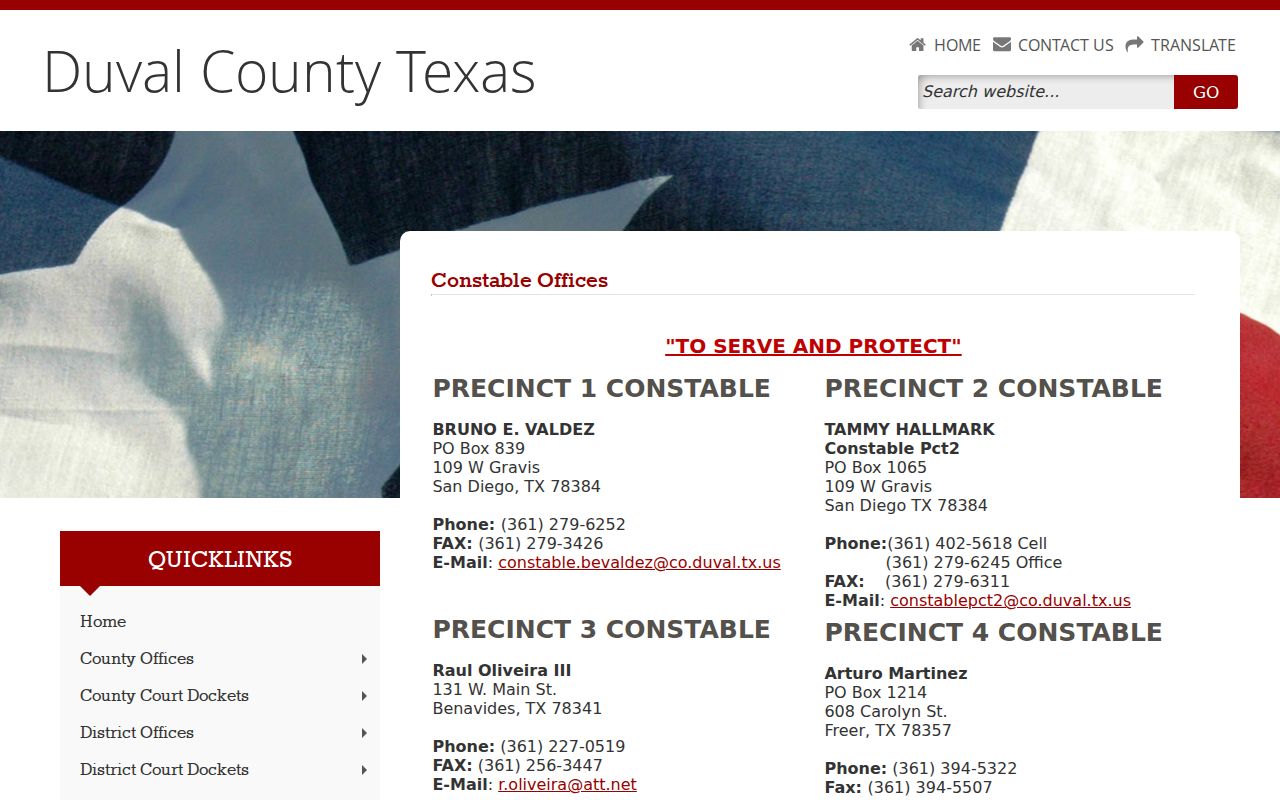
Call the issuing court before contacting any specific officer, since Duval County publishes no warrant-by-precinct service map.
Arrest Warrants, Summonses, and Bench Warrants
A summons tells a person to respond or appear, and it is not the same command as an arrest warrant. A bench warrant usually follows a missed court obligation. A new arrest warrant starts with a probable-cause process. All three can sit in one Duval County case history. Each order has its own reason and resolution.
| Process | Why it is issued | What to ask |
|---|---|---|
| Summons | Notice to appear or respond | Date, court, and required response |
| Bench warrant | Missed setting or court compliance | Recall, reset, or appearance procedure |
| Arrest warrant | Probable cause reviewed by a magistrate | Issuing court, service, bond, and counsel |
Use the exact wording from the signed order or docket. Similar terms do not mean the same process in Duval County.
Duval County Constable and Sheriff Roles
The Sheriff's Department is Duval County's main law-enforcement contact. Constables work from four precinct offices across the county. Administration answers at (361) 279-6209, and dispatch is (361) 279-3351. Neither number is listed as a warrant-only line, and city officers or marshals may serve municipal court process under Texas law. Ask the clerk which agency holds the order.
Duval County Sheriff's Department
401 E. Collins Ave., San Diego
Administration: (361) 279-6209
Duval County Bond Information Is Court-Specific
In Duval County, bond rules depend on the issuing court. Texas law allows personal bonds and, under stated conditions, bail bonds. The County Judge's page covers bond and surety duties. JP justices run bail examinations. Duval County publishes no countywide amount, jail bond window, accepted payment method, surety list, or after-hours surrender route. Traffic court costs are not bond amounts. Before travel, ask the court where an appearance or surrender should occur, who reviews bond, what identification is needed, and whether counsel can arrange a walk-through. Posting bond may free you while the case and the next court date stay open.
Federal and Duval Warrants Use Separate Channels
A federal warrant is not a Duval County court record. Federal matters in this region go through the Southern District of Texas, its federal courts, and the U.S. Marshals rather than any Duval County office. PACER can show docket entries. It is not a simple warrant confirmation service, and sealed matters may not appear. CourtListener and RECAP offer secondary help with public filings. For a suspected federal matter, use the federal court route with counsel. Never assume a sheriff call or OmniBase covers it. The Southern District of Texas court page is the official source for finding the right federal court.
Its jurisdiction and record systems are separate from county clerk and sheriff records.
Duval County Arrest Warrant Search Before Service
Call a Texas attorney first. Also call the likely issuing court. Go that route before visiting any Duval County jail or courthouse, and ask whether a voluntary appearance can be scheduled and whether counsel may arrange it. Ask what bond or personal-recognizance procedure applies. Duval County publishes no jail intake hours and no surrender protocol.
- Confirm the court and case number from the notice or docket.
- Ask the clerk what order appears and which agency has service responsibility.
- Have an attorney review the case and contact the court about a controlled appearance or motion.
- Confirm location, hours, identification, and bond method before traveling.
- Keep the written order or receipt and ask when the record is updated.
Act with counsel: Do not rely on a search result to plan a surrender. Confirm the order, location, and court instructions with the issuing office first.
Duval County District Court Felony Files
Duval County felony cases land in the 229th Judicial District Court. Its clerk keeps the district criminal case files, and a coordinator runs the local scheduling. A docket entry can lead you to a cause number or a setting, but it will not confirm an active warrant on its own. The 229th court page posts Duval County contacts and cautions that calendars can change. Call before appearing. If your matter sits in a county court or a JP court, that court's clerk is the right stop, and the official 229th District Court page shows the contact and calendar route itself.
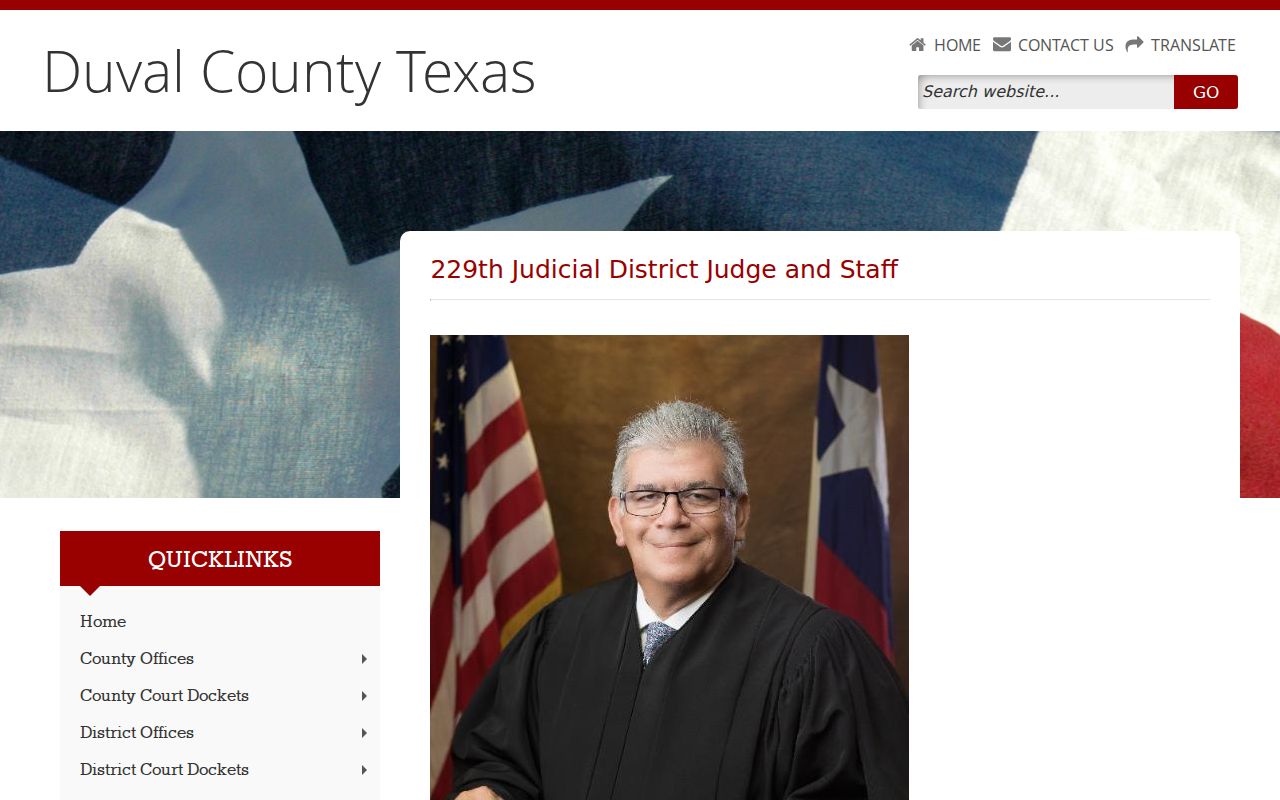
Use it to reach the court, not to infer whether a warrant exists.
Handling an Arrest Warrant in Your Name
Start with the issuing court. Get its confirmation first. Then ask whether the order can be recalled or quashed, or handled through an appearance or bond. A motion and a voluntary appearance both carry legal consequences, so a lawyer should review the facts and the court's current entry. Court staff can explain forms and deadlines. They cannot advise you on what position to take. For the wider steps after a court confirms an order, the home page's Duval County warrant resolution section lays out the local call-first route, the limits on published bond details, and why written confirmation matters. That section keeps the practical order straight.
Duval County Warrant Records and Public Access
Duval County records sit under two Texas frameworks. A written Texas Public Information Act request can seek an existing law-enforcement record, though exceptions apply. A court clerk may instead use judicial-record access rules. Chapter 15 works differently. It requires an officer to make the authority for an arrest known and to show the warrant on request as soon as practicable, but it does not open every supporting file to the public. Ask the court which papers are available. Chapter 15 sets the arrest-warrant rules, Texas Government Code Chapter 552 covers access to governmental-body records, and a child's arrest warrant is generally confidential under Family Code Chapter 58.