
Duval County Warrant Checks
A real warrant check in Duval County starts with the likely issuing court, not a broad web sweep. A city traffic citation belongs to San Diego, Freer, or Benavides Municipal Court. A precinct citation goes to one of four Justice of the Peace courts. Misdemeanor and felony files sit with the County Clerk or District Clerk according to the court. The sheriff's public page lists contact details but posts no online warrant list, so the phone call carries the weight. Before dialing, gather your full name, date of birth, citation or cause number, and the court named on any notice. Helping a family member? Use the same case identifiers and ask that court what it can release. A call can explain the next step, though it will not recall a warrant or change a court record on its own.
- Match the citation or case to a city court, JP precinct, county court, or district court.
- Use a court-linked citation or payment page only as a case lookup, not as proof that a warrant exists or is clear.
- Call the clerk and ask for the current warrant, FTA, capias, or capias pro fine status.
- Contact the sheriff's administrative office if county service is involved, then request existing records in writing when needed.
- Use OmniBase for reported FTA or failure-to-pay status and ask the court about any warrant separately.
Duval County Sheriff Contact Limits
The official Duval County Sheriff's Department page lists an administrative office, dispatch line, address, email, and weekday hours. It names no warrant division. It posts no warrant-specific phone number and no active-warrant list. For a question about county service, the administrative number is the public contact; dispatch is not labeled as a warrant line, so reserve it for urgent matters rather than routine case research. Start at the sheriff's official contact page to confirm current details before a call or visit. A sheriff inquiry may help with service questions, but the issuing court controls the case entry, payment terms, recall, and the next setting. The county's published sheriff contact panel lists the office's contact information only.
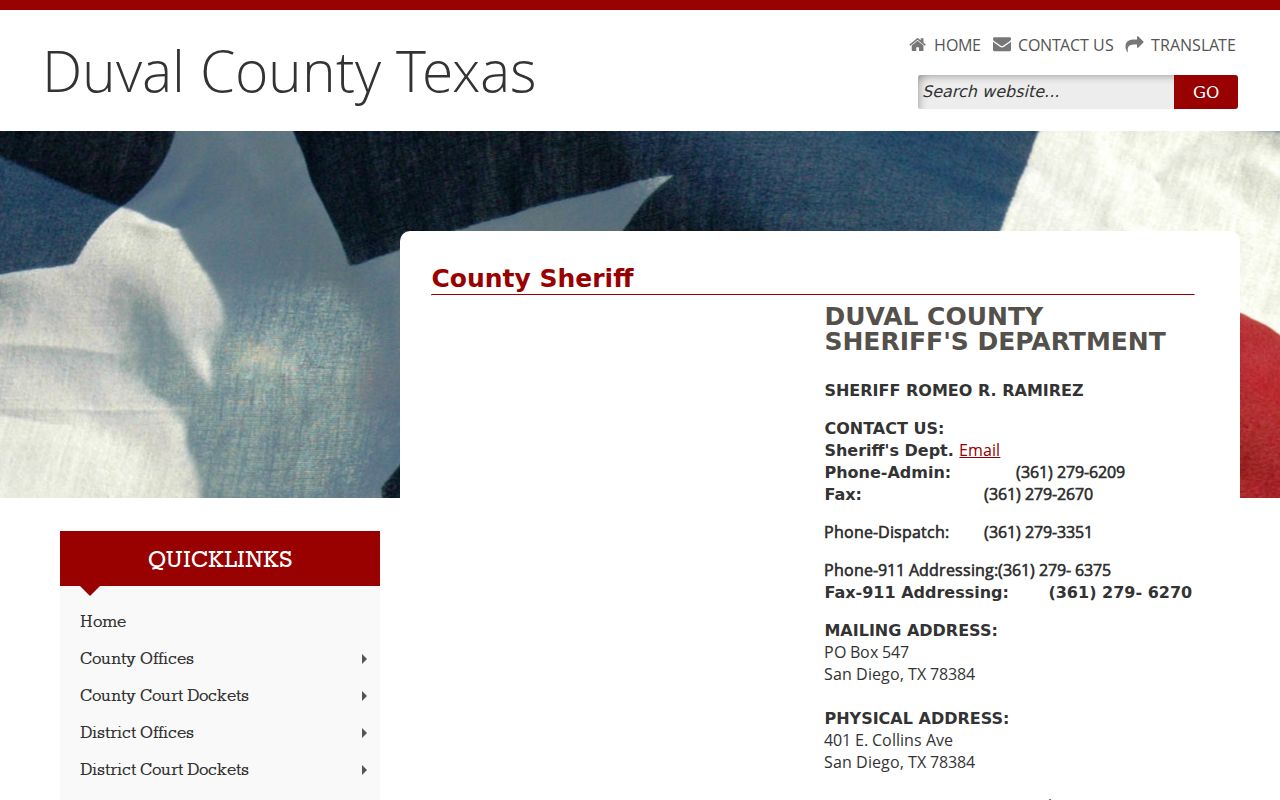
Use the listed Duval County office to ask which court should answer a case-specific question. The page will not confirm whether a person has a warrant.
Duval County Sheriff's Department
401 E. Collins Ave.
San Diego, TX 78384
(361) 279-6209
Warrants in Duval County: The Main Types
In Duval County, "warrant" covers more than one kind of court order. A probable-cause arrest warrant starts from a sworn complaint or other lawful basis. A bench warrant usually follows a missed setting. A capias pro fine ties to an unpaid judgment and has its own statutory process. Search warrants cover described property or evidence, with separate access rules for their records.
| Record type | How it may arise | Likely court layer |
|---|---|---|
| Arrest warrant | Magistrate reviews a probable-cause complaint | 229th District Court, County Court, JP, or magistrate |
| Bench or FTA warrant | A required court appearance was missed | Court that set the case |
| Capias pro fine | Fine or court costs remain after judgment | Justice or municipal court |
| Search warrant | Magistrate finds the legal basis to search | Issuing magistrate and law-enforcement agency |
Duval County's Four JP Counters
Duval County's JP courts do not share one records desk. Precinct 1 and Precinct 2 list counters in San Diego. Precinct 3 runs its docket from the Benavides Civic Center, and Precinct 4 sits in Freer. Per the official directory, JPs handle Class C cases in their precincts and perform magistrate functions, including probable-cause review, bail examinations, and warrant work. The county Justice of the Peace directory lists each clerk and its contact route. Match the precinct printed on the citation before calling, because a Benavides city-court matter and a JP3 case go to different clerks even in the same town. The county JP directory shows the four public entries, a contact map rather than a warrant roster.
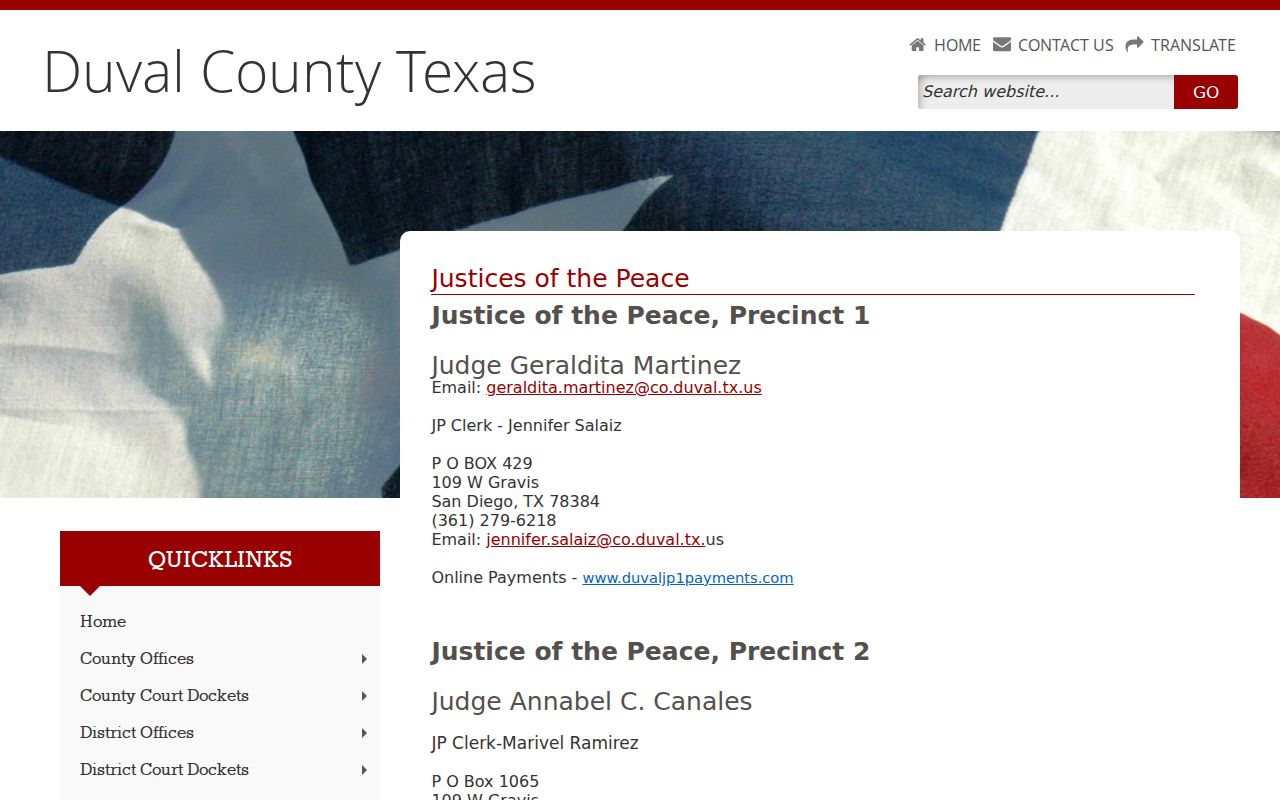
Ask the Duval County precinct clerk about the citation, any FTA entry, and what the court requires before payment or an appearance.
Duval County Warrant Records: What They Show
Duval County's public sources show no sample warrant listing or standard public warrant-number format. Court records may rely on a citation or cause number instead. County docket PDFs can carry a cause number, offense or setting, style, attorney, jail or non-jail note, and docket note. A docket is still not an active-warrant roster.
| Identifier | Use the citation or cause number from the court notice; no Duval warrant-number pattern was verified. |
|---|---|
| Issuing court | The JP, municipal, county, or district court that signed or entered the process. |
| Case label | The offense, city ordinance, traffic matter, FTA, capias, or capias pro fine as the clerk records it. |
| Bond or amount | Ask the issuing court. Duval has no published countywide bond schedule in the reviewed sources. |
| Status | Ask whether the entry is active, served, recalled, quashed, or otherwise closed, and when connected systems update. |
JP2 Payment Starts With a Bureau Code
Duval County's JP2 page routes payments through Certified Payments instead of a stand-alone citation search. The service wants a bureau code supplied by the court or printed on a bill. No code? Call JP2 before attempting payment. This route can settle a JP2 balance, but it exposes no countywide warrant roster, so ask the clerk whether the case carries an FTA or capias entry and what action will update it.
Duval County Dockets Versus Warrant Records
The Duval County docket index organizes court settings, not a countywide warrant search. The official docket page links current and archived materials and posts cancellation or postponement notices. A docket note can help you identify a court and cause number. It may not state the current service status of a separate warrant, though. Read docket material only to locate the court and setting that matter to your case, and never treat an old PDF as current clearance. The county's published docket index shows the date and category layout of the page itself.
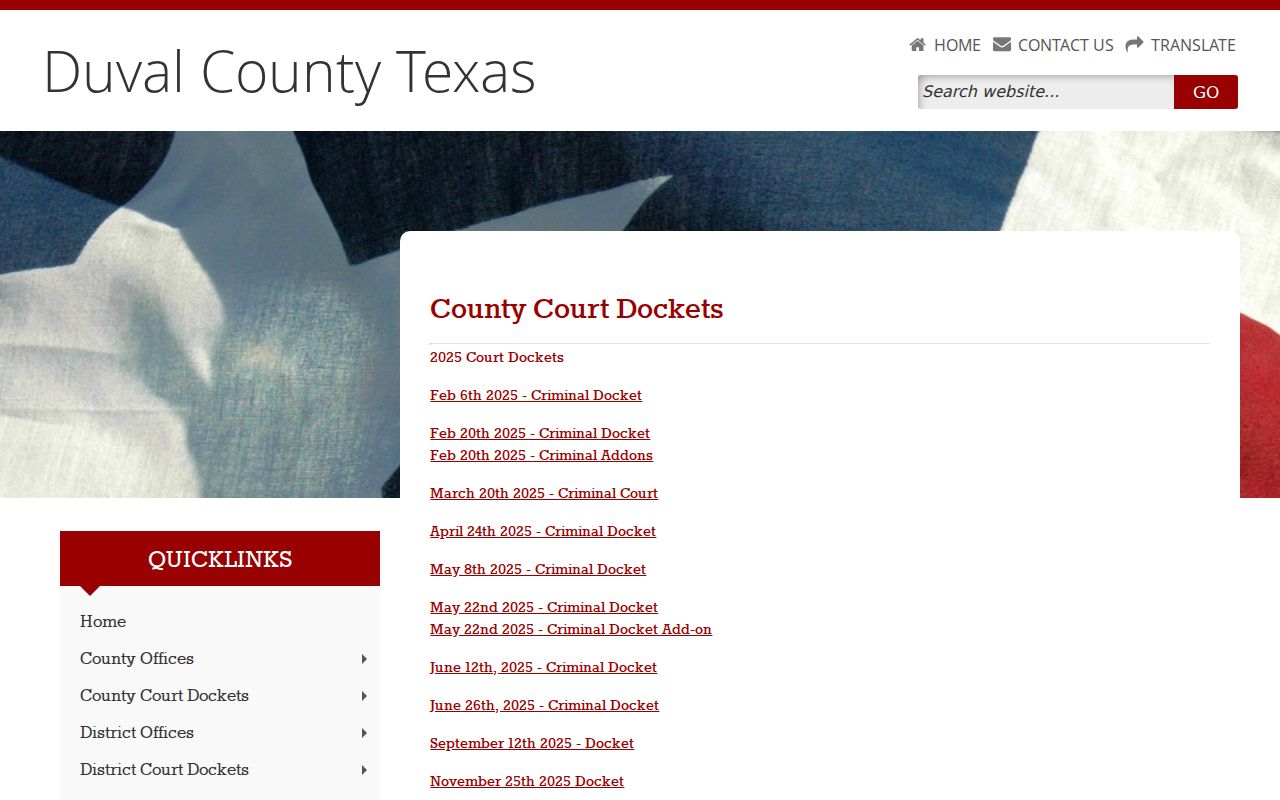
Call the Duval County clerk listed for the court and ask what the latest entry means. The clerk can explain the record process, while a lawyer can advise on a pending case.
Duval County Warrants: Who Issues, Who Serves
Courts write the orders. Officers serve them. In Duval County, the 229th Judicial District Court handles felony matters, while the County Clerk keeps county-court files and the District Clerk holds district criminal records. City and JP clerks keep their own lower-court papers. Service can fall to a sheriff, constable, municipal peace officer, or another authorized officer. The county's constable directory lists four precinct offices. It does not match warrant types to a named constable. Ask the issuing court which agency carries the service role. The county page names the sheriff as a law-enforcement contact, not the keeper of every court record.
Duval County's Courthouse and Record Route
San Diego serves as the Duval County seat. The courthouse at 400 E. Gravis opened in 1916, after the earlier wood-frame building burned in 1914. An annex followed in 1938. Several court and clerk functions share the county campus, though JP3 and JP4 sit in separate offices in Benavides and Freer. Knowing the exact court name matters more than assuming every record waits at one counter. The official county homepage lays out courthouse and county information, and it works as a starting point for locating the right office rather than as a warrant search screen.
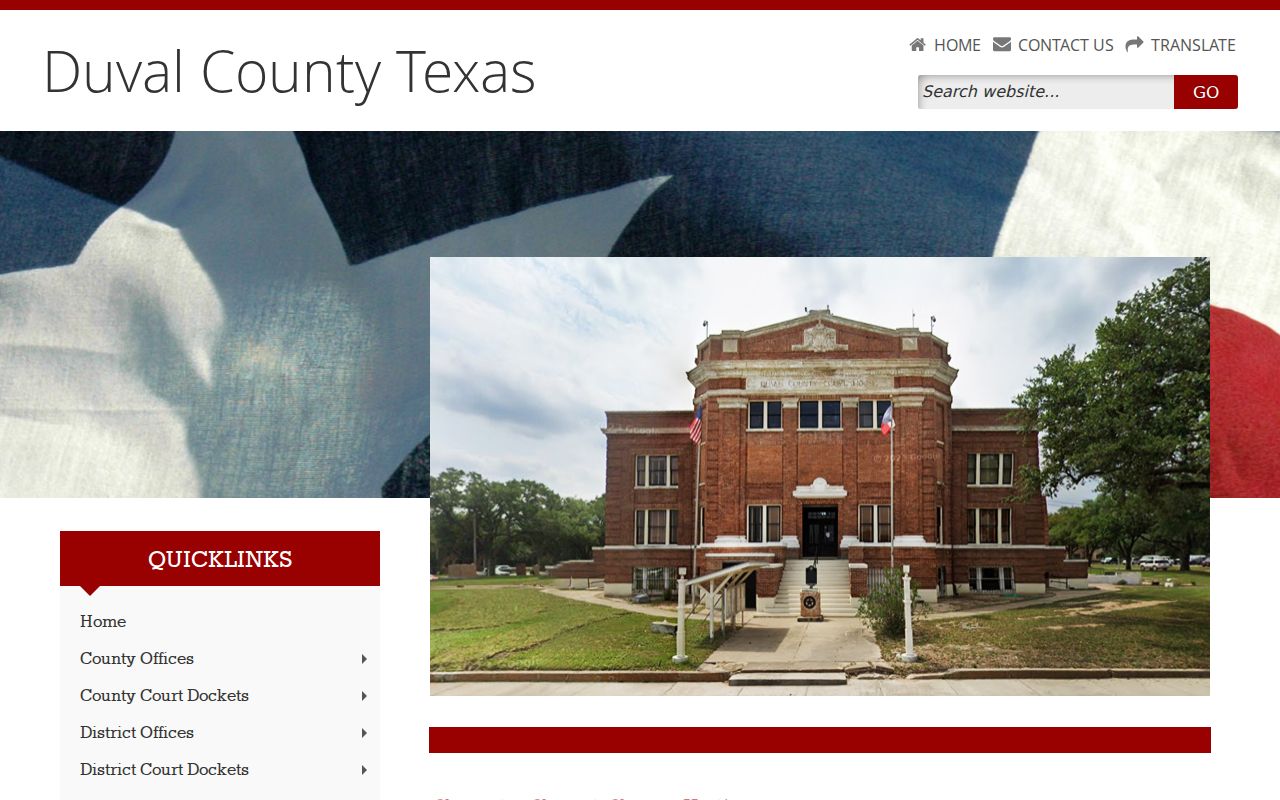
Call the clerk before traveling in Duval County. The 229th District Court page warns that calendars can change, and the county docket page may post moves or cancellations.
Handling a Duval County Warrant
If a court confirms a warrant, ask what kind it is. Then ask which action resolves it. A voluntary appearance, payment, reset, attorney-arranged motion, or bond may apply. The right fix depends on the case and the court. Duval County publishes no jail surrender window, bond counter schedule, or countywide bond amount. The sheriff's administrative hours are not jail or bond hours.
Before acting: Speak with a Texas attorney and the issuing court about appearance, surrender, bond, or recall steps; a website result cannot arrange a safe court process.
After a payment or hearing, get written confirmation. Ask whether the sheriff, constable, or OmniBase record needs a separate update. More resolution steps sit in the Duval County arrest warrant lookup for readers handling a custody order.
No Countywide Bond Schedule Was Located
The county pages list court and sheriff contacts. Duval County posts no general bond counter schedule and no countywide bond amounts. Where you ask depends on the citation, the warrant type, and the issuing court. A JP or municipal case may carry terms unlike a felony matter. Call the issuing clerk before travel. Ask whether an appearance, payment, bond, or attorney-arranged request fits your case. The sheriff's administrative office is not a jail booking guide, so confirm custody or bond steps with the office assigned to the case.
Duval County Freer Court Procedure
Freer Municipal Court publishes its own forms and choices. None of it works as a countywide rule for Duval County. The court's public procedures cover a 30-day extension, a payment plan, an ability-to-pay request, a community service hearing, jail credit, a not-guilty response, a driver-safety course, and deferred disposition. Each request has its own steps. A court call does not count as a formal appearance. Payments can go online or by phone card. Checks and money orders work by mail. Cash does not. Full payment is treated as a guilty or no-contest plea and results in a judgment of guilt. A one-time $15 time-payment fee applies 31 days after a payment-plan request. Those terms govern the Freer docket, not San Diego, Benavides, or a JP case elsewhere in Duval County. Use the Freer court's own forms. Ask whether any option affects an already-issued warrant. Save your payment receipt and any written court response.
Warrant Record Access Under Texas Law
Texas rules do not open every warrant file. A written request under the Texas Public Information Act can seek an existing law-enforcement record in Duval County. A court clerk may apply judicial-record procedures instead. An agency can withhold material under a law-enforcement exception. Juvenile warrant papers carry their own confidentiality rules, and search-warrant affidavits generally become public after execution, subject to exceptions.
Duval County access rules:
Texas Government Code Chapter 552 provides a written route to existing public information held by a governmental body.
Texas Family Code Chapter 58 restricts public access to a child's arrest warrant and supporting papers.
Texas Code of Criminal Procedure Chapter 18 governs search-warrant affidavits and when they become public.
City Warrant Records in Duval County
The Census Bureau's 2020 incorporated-place table lists three Duval County cities in population order: San Diego, Freer, and Benavides. Realitos is unincorporated. It has no city municipal court page here. A city citation starts with that city's court. The county layer comes in only when the case or service route calls for it. The Census incorporated-place table supplies the population snapshot. Its rows hold city data, not warrant records.
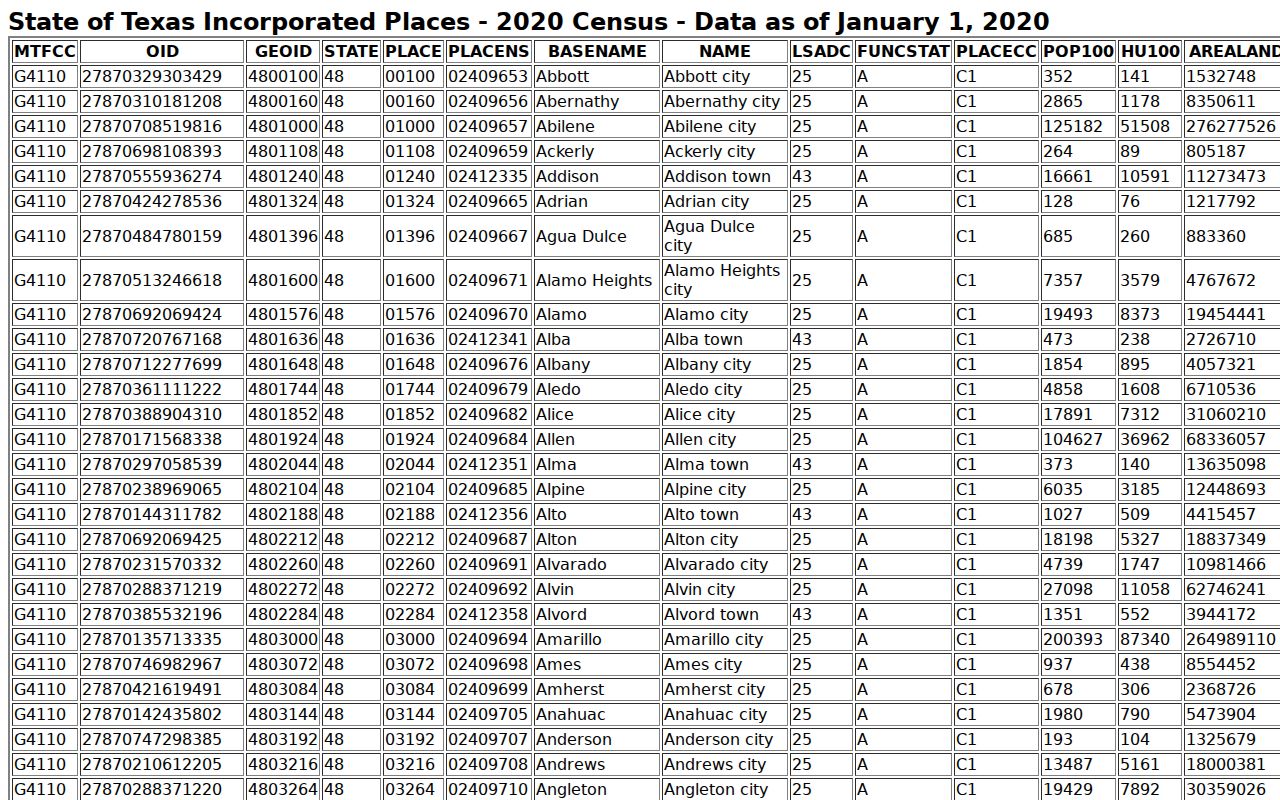
Choose a city route below for its own court and police contacts.
San Diego Warrants
3,748 residents in 2020; start with San Diego Municipal Court for city citations.
Freer Warrants
2,461 residents in 2020; the city court publishes citation search and resolution forms.
Benavides Warrants
1,183 residents in 2020; call the municipal clerk to verify the current contact route.